Method
Chromatographic system based on:
Chromatec-Crystal 5000/9000
Detectors:
TCD and FID; the number of detectors depends on the analytical task
Packed columns or packed and capillary columns:
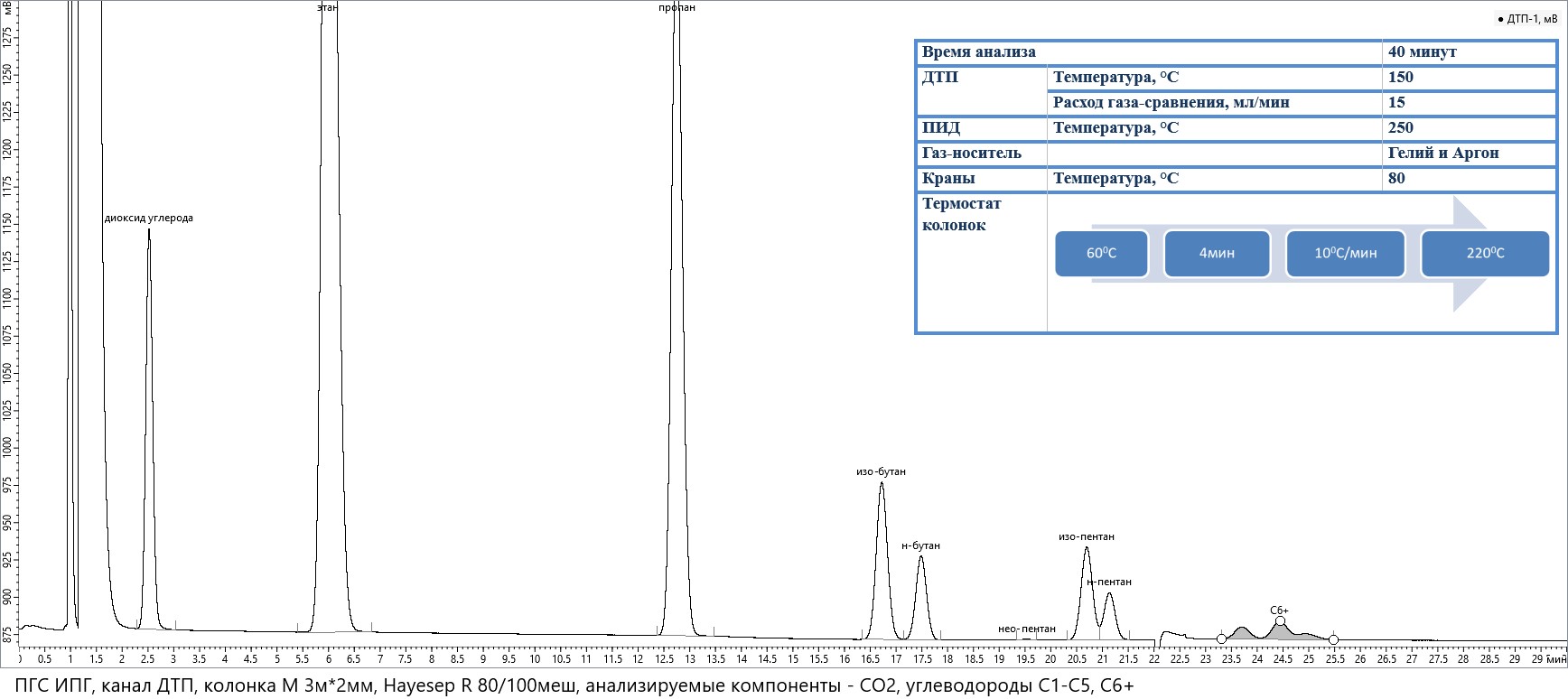
Packed Column M, 3 m × 2 mm, HayeSep R (Porapak R), 80/100 mesh
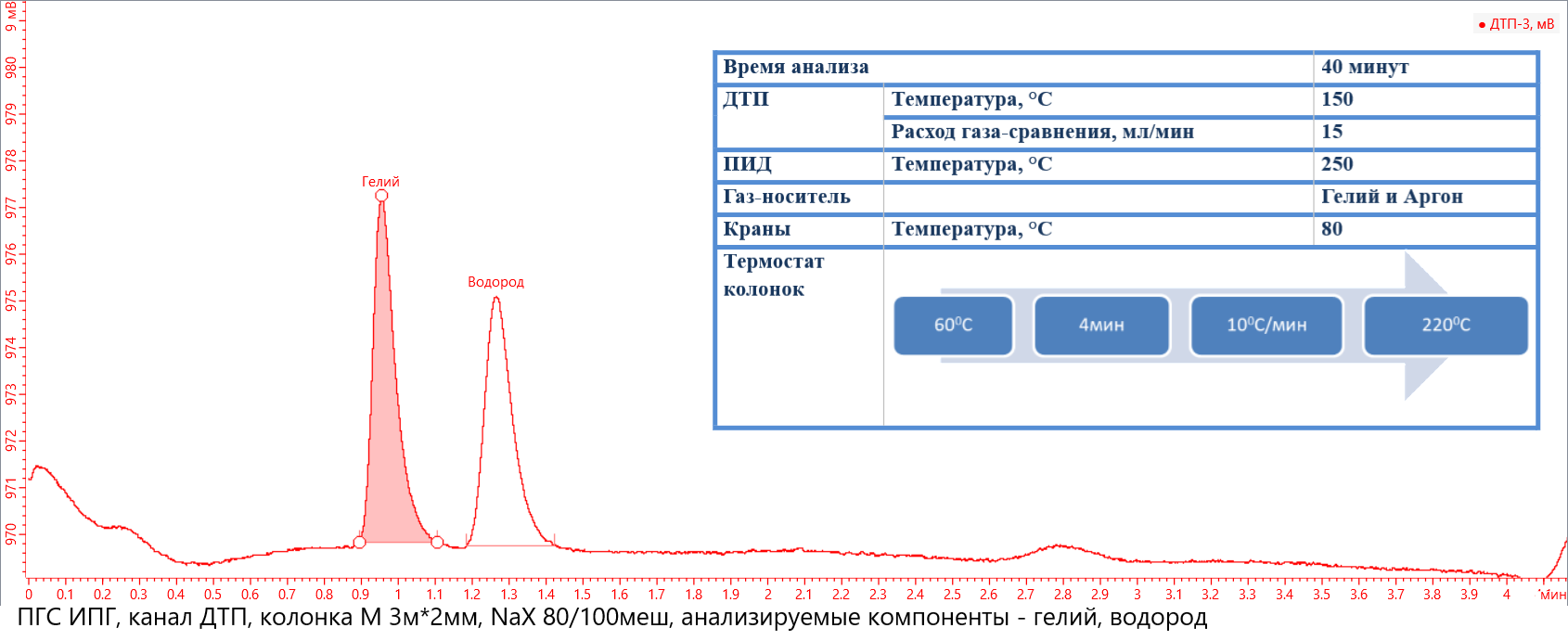
Packed Column M, 3 m × 2 mm, NaX, 80/100 mesh
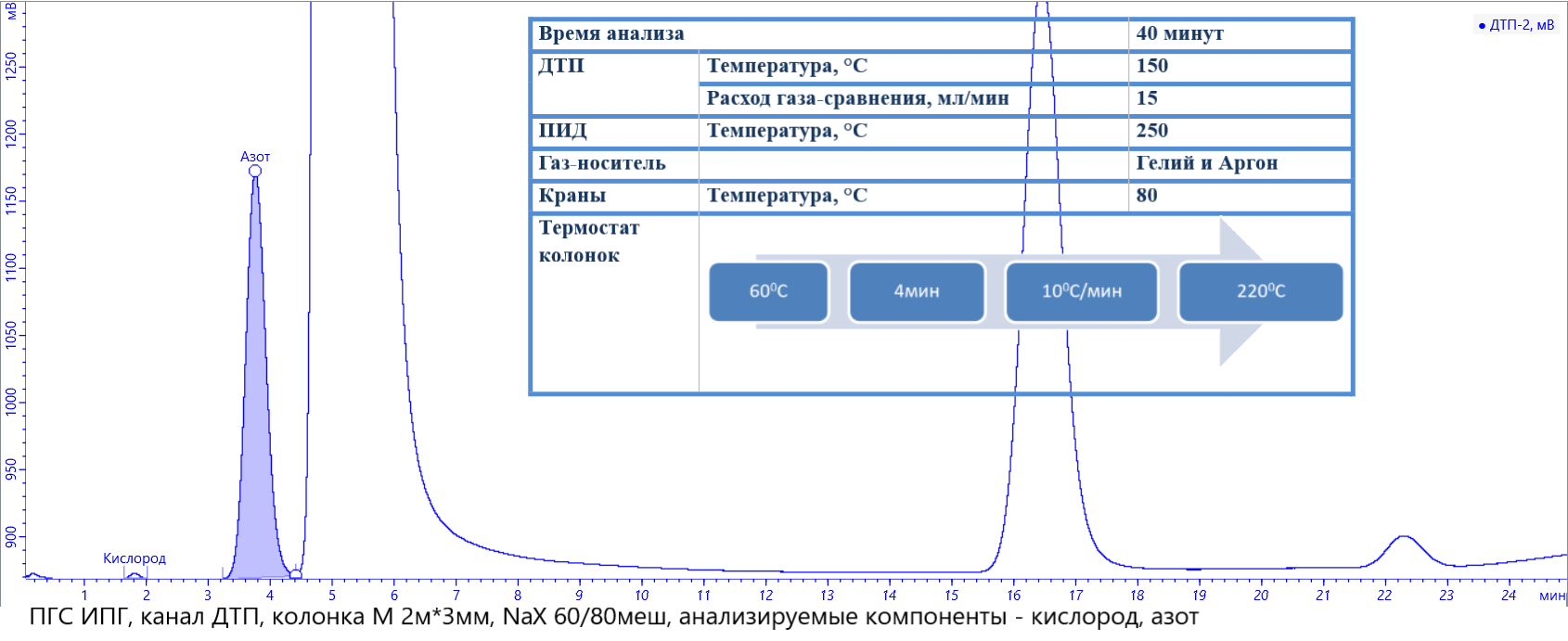
Packed Column M, 2 m × 3 mm, NaX, 60/80 mesh
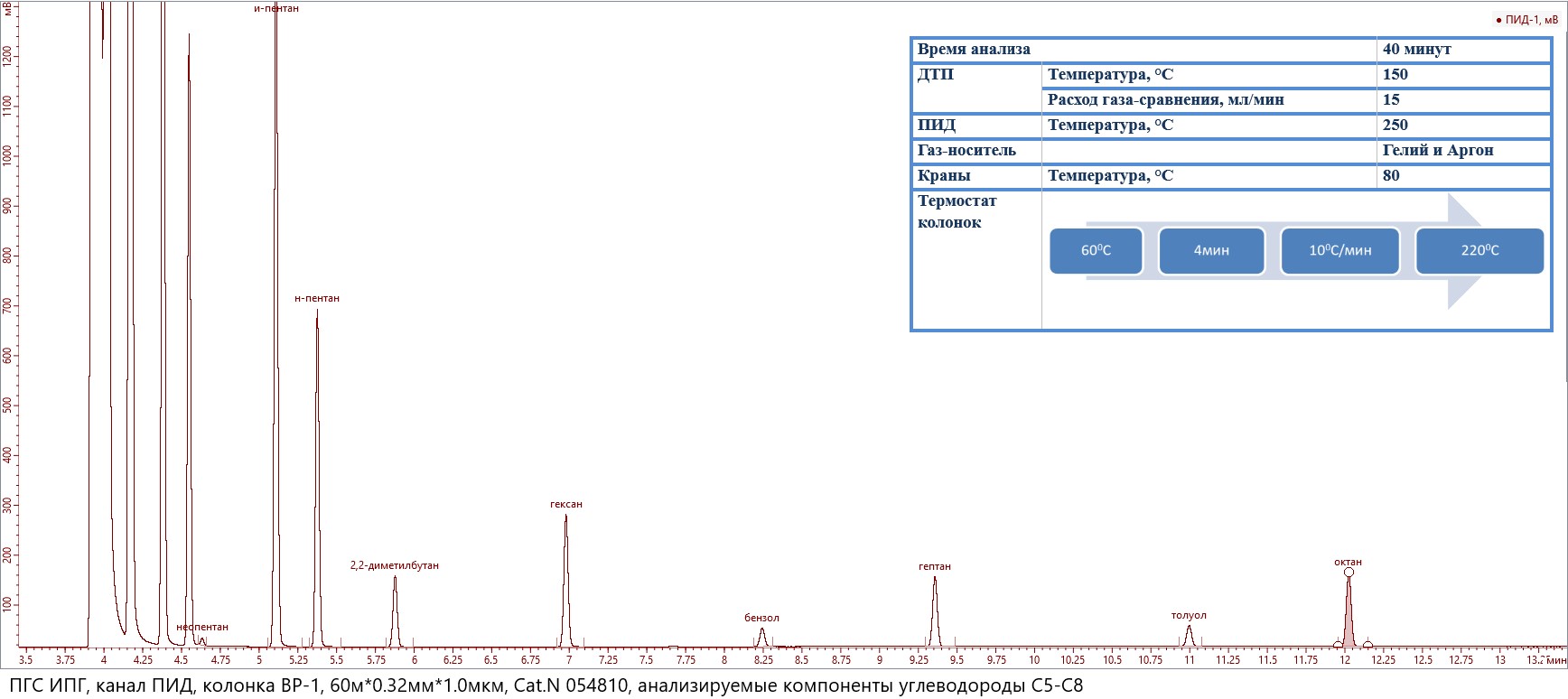
Capillary Column BP-1, 60 m × 0.32 mm × 1.0 µm, Cat. No. 054810
Other columns may also be used
Injection system:
Chromatec or Valco 6-port and 10-port valves with loop volumes from 0.1 to 2 mL, depending on the column used
4-port and 6-port switching valves
Heated transfer line
Gas flow indicator
Additional data processing software:
Chromatec Gas
Additional equipment:
Hydrogen generator (when using FID)
Air compressor (when using FID)
Gas fittings kit 4.078.000 – 2 pcs. (argon and helium)
Catalytic air purification filter 20.0-01
Certified gas mixtures (PGS, IPG) for instrument calibration
Adjustable pneumatic resistance RPS 5.150.019 for operation with standard gas mixtures and sampling devices
Method Description
GOST 31371.7-2008, GOST 31371.7-2020
Natural gas. Determination of composition by gas chromatography with uncertainty evaluation. Part 7. Procedure for measuring the molar fraction of components.
Molar fraction ranges covered by GOST 31371.7-2020
| Component | Formula | Molar Fraction, % |
|---|---|---|
| Helium | He | 0.001–0.5 |
| Hydrogen | H2 | 0.001–0.5 |
| Oxygen | O2 | 0.005–2.0 |
| Nitrogen | N2 | 0.05–15 |
| Methane | CH4 | 40–99.97 |
| Carbon Dioxide | CO2 | 0.005–10 |
| Ethane | C2H6 | 0.001–15 |
| Propane | C3H8 | 0.001–6 |
| Isobutane | C4H10 | 0.001–4 |
| n-Butane | C4H10 | 0.001–4 |
| Isopentane | C5H12 | 0.001–2 |
| n-Pentane | C5H12 | 0.001–2 |
| Neopentane | C5H12 | 0.001–0.5 |
| Hexanes | C6H14 | 0.001–1 |
| C6+ | — | 0.005–1.5 |
| Heptanes | C7H16 | 0.001–0.25 |
| Octanes | C8H18 | 0.001–0.05 |
| Benzene | C6H6 | 0.001–0.05 |
| Toluene | C6H5-CH3 | 0.001–0.05 |
| Methanol | CH3OH | 0.001–0.05 |
Application of GOST 31371.7
GOST 31371.7 allows the use of both laboratory and process (industrial) chromatographs with various combinations of detectors and chromatographic columns.
For laboratory chromatographs, the most popular configuration includes packed columns with HayeSep (or Porapak) polymer sorbent and NaX zeolite, as well as capillary columns when qualitative analysis of C5 and heavier hydrocarbons is required.
The system configuration directly depends on the gas composition and the customer’s analytical objectives.
Basic configuration for analysis
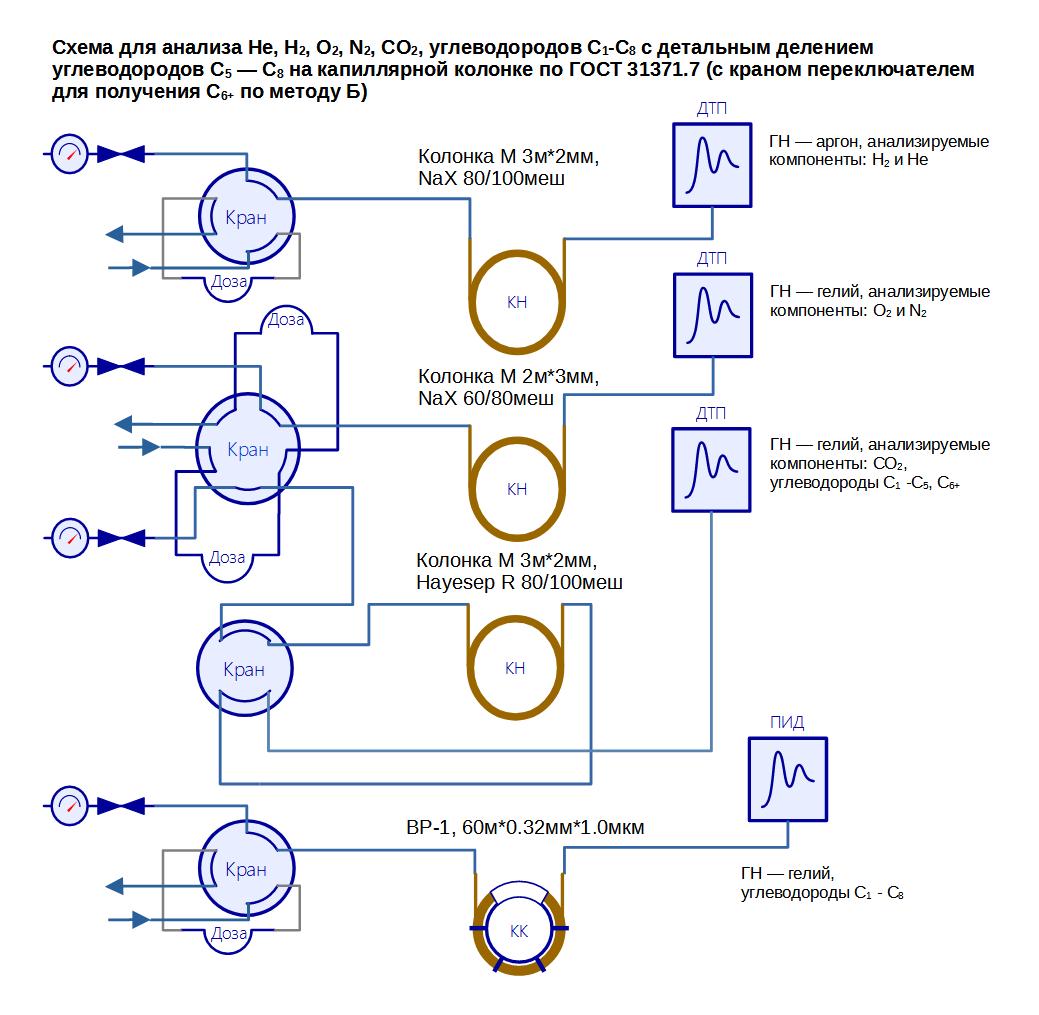
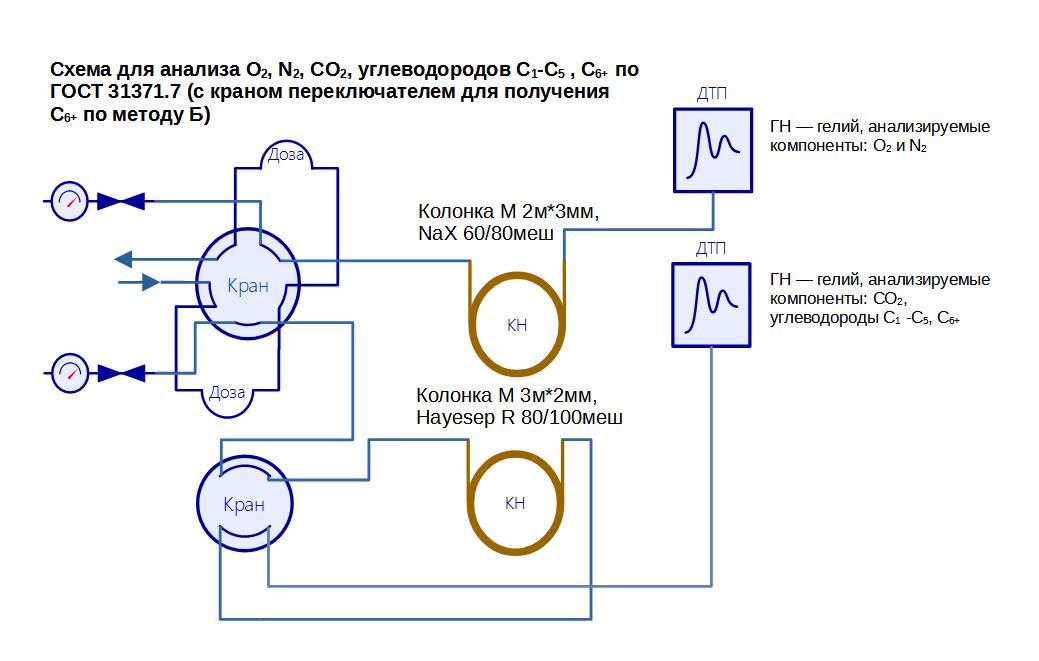
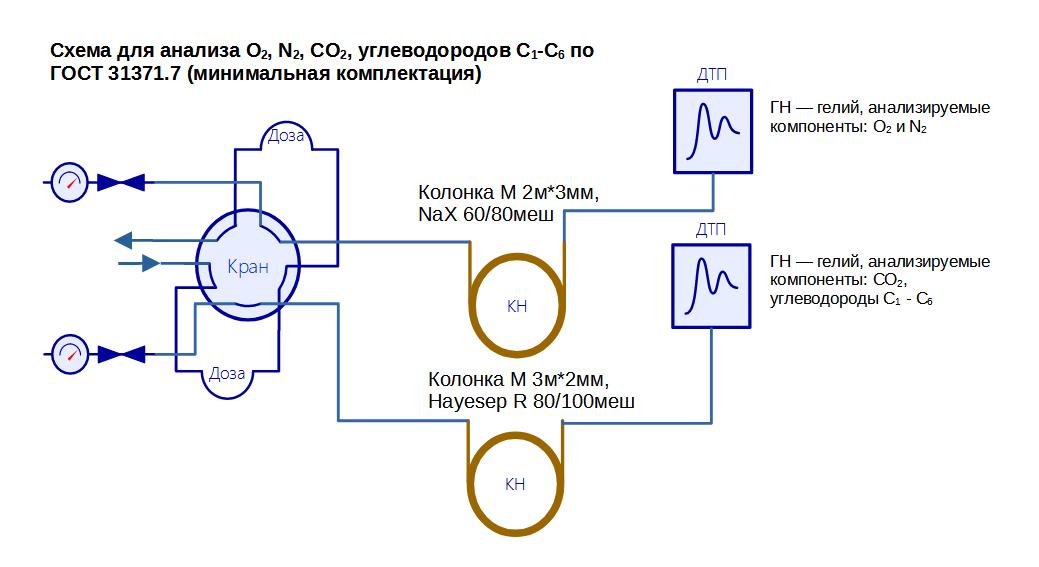
A basic (minimum) configuration can be identified for gas analysis. For dry gas, a chromatograph with one 10-port valve (Cat. No. КрД10.2-16(1.1).52.АТ-po or Valco), packed columns M 3 m × 2 mm HayeSep R 80/100 mesh and M 2 m × 3 mm NaX 60/80 mesh, and two TCD detectors can be used.
Carrier gas: helium
This configuration makes it possible to analyze O2, N2, CO2, and C1-C6 hydrocarbons.
Additional configuration options under GOST 31371.7
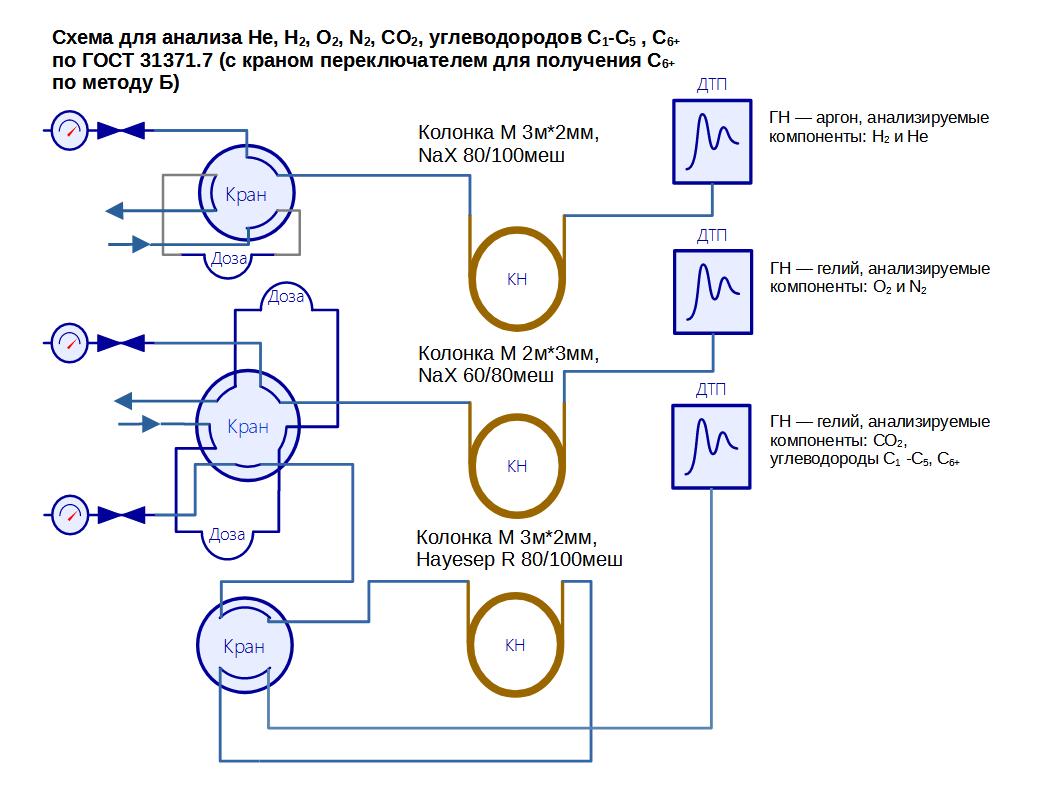
When determination of the C6+ pseudocomponent is required (Method B), a 4-port switching valve (Cat. No. КрП4.2-16(1.1).52.АТ or Valco) is added.
When monitoring helium and hydrogen is required, an additional channel is added with a 6-port valve (Cat. No. КрД6.2-16(1.1).52.АТ or Valco), a packed column M 3 m × 2 mm NaX 80/100 mesh, and a TCD detector.
Carrier gas for this channel: argon
For associated gas or rich gas containing significant amounts of heavy hydrocarbons, or when detailed separation of hydrocarbons from C6 and above is required, it is recommended to use an additional channel with a capillary column (for example, BP-1, 60 m × 0.32 mm × 1.0 µm, Cat. No. 054810) and an FID detector. An additional 6-port valve (Cat. No. КрД6.2-16(1.1).52.АТ or Valco) is also added for sample injection.
The final configuration with three TCDs and one FID with a capillary column is the most universal option and can be used for practically any type of gas.
Important Notes
GOST 31371.7-2020 includes methanol in the table of components, but the standard does not describe the analytical procedure for its determination. Therefore, for methanol analysis, we recommend using STO Gazprom 5.36 and 5.45. More details available upon request.
No modification of the chromatograph hardware is required to comply with GOST 31371.7-2020, provided that the system already met the requirements of GOST 31371.7-2008, and the user does not change either the composition determination method (Method A of GOST 31371.7-2008 → Method A of GOST 31371.7-2020; Method B of GOST 31371.7-2008 → Method B of GOST 31371.7-2020) or the list of components to be determined.
A chromatograph designed for operation in accordance with GOST 31371.7-2008 may also be used under Method C of GOST 31371.7-2020, provided that the linearity of the calibration characteristic is confirmed over the working measurement range of the analyzed components.