Method
Chromatographic system based on:
Chromatec-Crystal 5000/9000
Detectors:
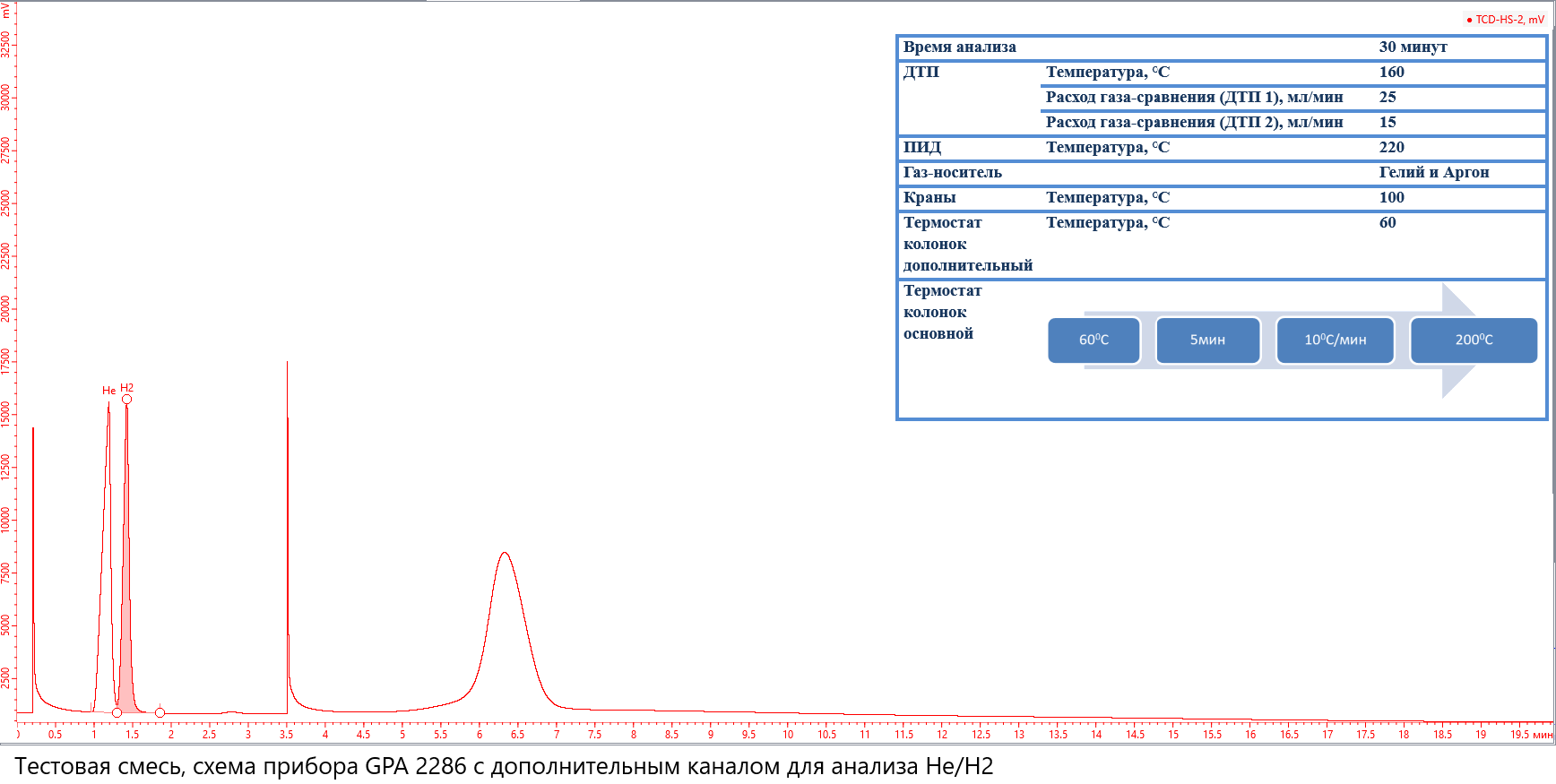
TCD and FID; if hydrogen and helium analysis is required, a second TCD can be added
Columns:
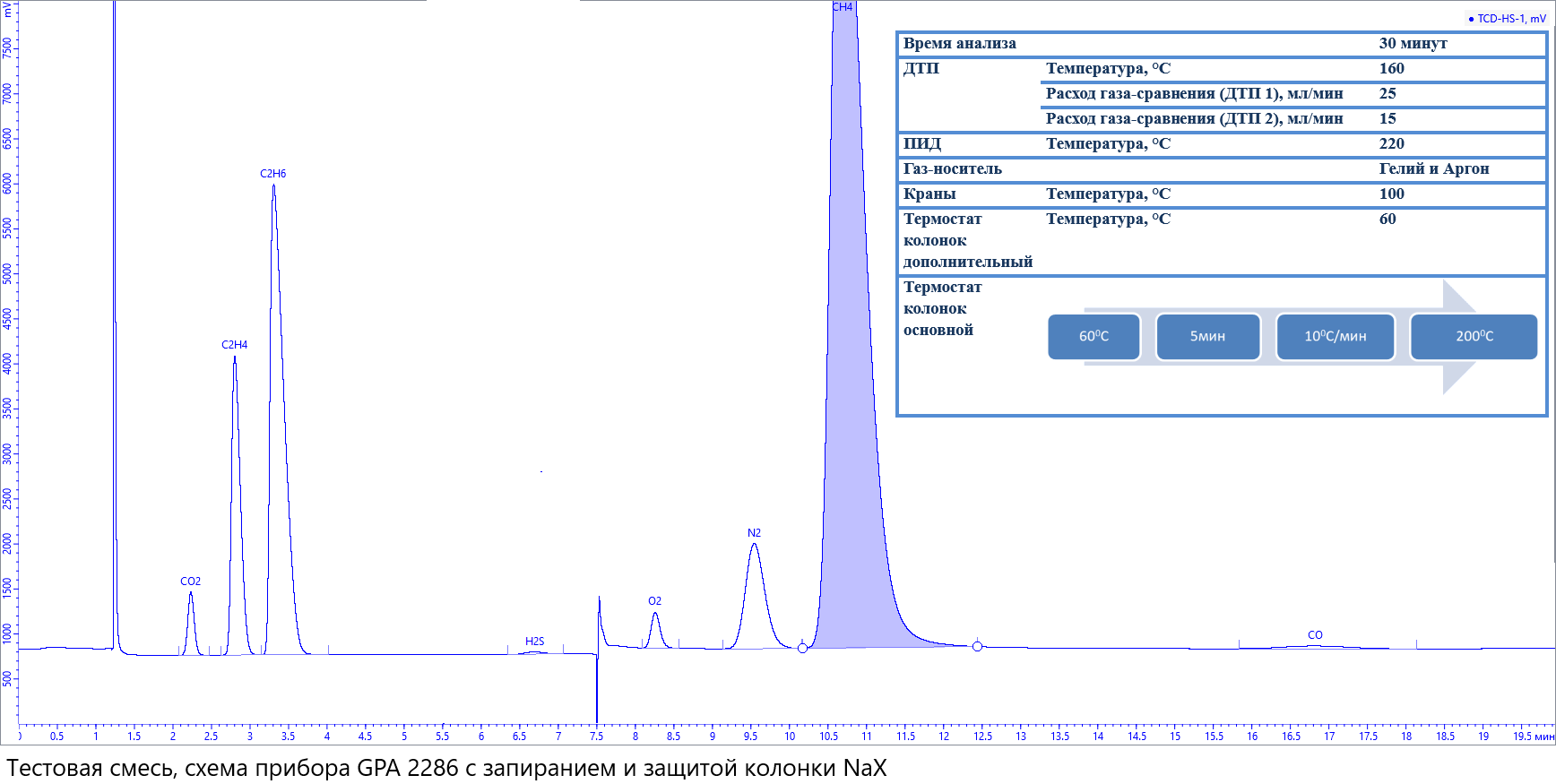
Packed columns for the separation of O2, N2, H2S, C1, C2, CO2, and CO
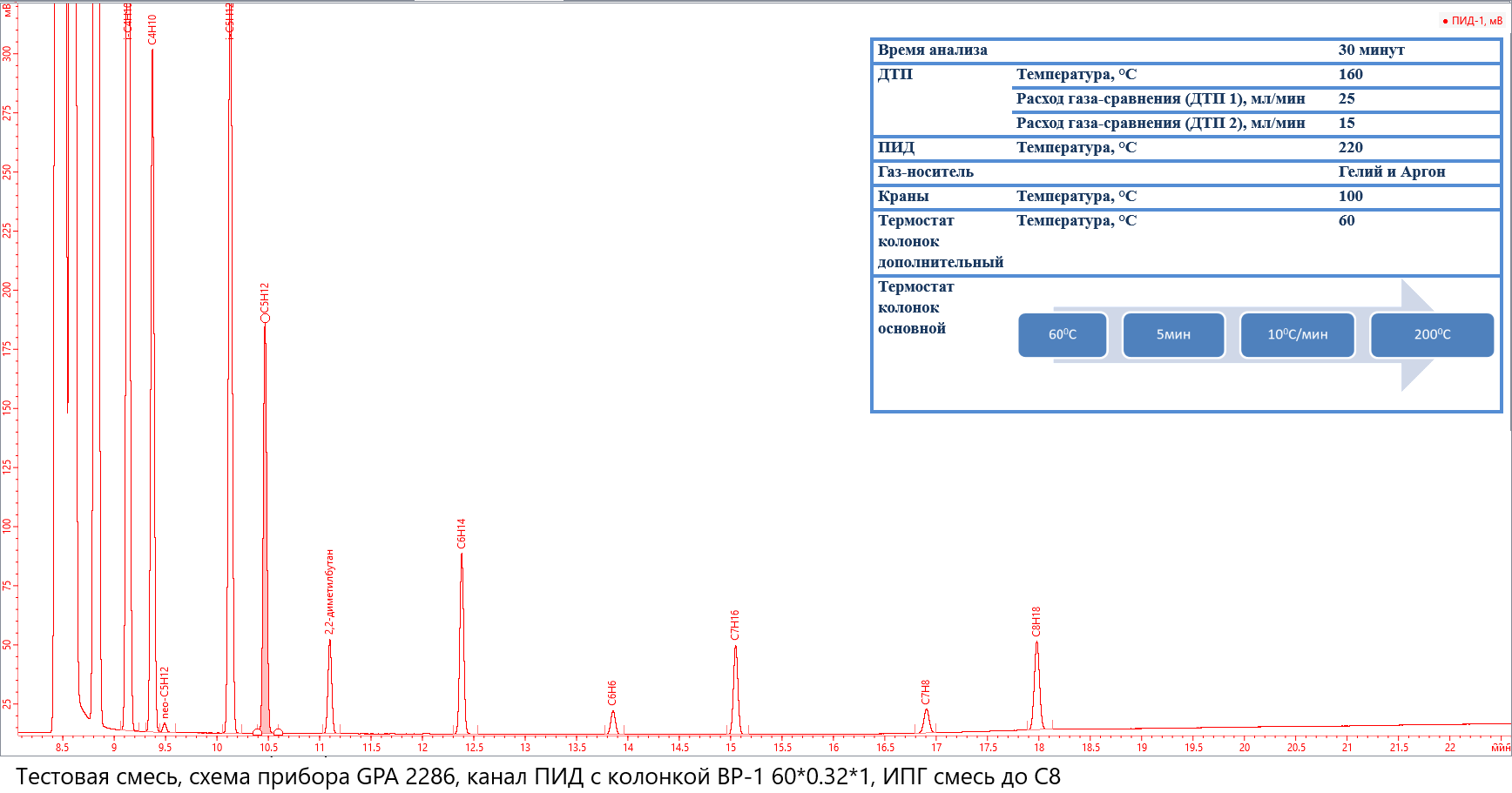
Capillary Column BP-1, 60 m × 0.32 mm × 1.0 µm, Cat. No. 054810
Column set for H2 and He separation (optional)
Injection system:
10-port Chromatec or Valco valve with loop volumes from 0.1 to 1 mL
6-port switching valves
Heated transfer line
Vacuum system for the injection channel (optional)
Additional data processing software:
Special Calculations package (4 calculations)
Additional equipment:
Hydrogen generator (when using FID)
Air compressor (when using FID)
Gas fittings kit 4.078.000 – 1 pc. (helium)
If a helium/hydrogen analysis channel is added, one more gas fittings kit is required for the carrier gas — argon
Catalytic air purification filter 20.0-01
Certified gas mixtures (PGS, IPG) for instrument calibration
Adjustable pneumatic resistance RPS 5.150.019 for operation with standard gas mixtures and sampling devices
Method Description
GPA 2286 provides an extended analysis of the component composition of natural gas.
The method is used to determine the composition of gases with a high content of heavy fractions up to C14, as well as carbon dioxide, hydrogen sulfide, oxygen, nitrogen, and hydrogen, depending on the selected equipment configuration.
The method allows component determination over a wide concentration range. In the GPA 2286-96 version, the ranges for nitrogen, CO2, methane, ethane, and hydrogen sulfide are from 0.1% (and for some components from 0.001%) up to 100%.
In the GPA 2286-2014 version, these ranges were significantly reduced. In practice, the creators of the method took a very conservative approach by narrowing the ranges compared to the 1996 version, even though the capabilities of modern equipment configurations with capillary columns have only improved.
Key Features of the GPA 2286 Configuration
For the configuration used for GPA 2286, the following key features can be highlighted:
- Two channels in the basic configuration: TCD and FID; if He and H2 analysis is required, a second TCD is added
- Backflushing of the packed column from heavy components and protection of the molecular sieve column from heavy hydrocarbons, hydrogen sulfide, and carbon dioxide
- Packed columns are installed in an additional oven, which prevents overheating and improves separation quality
- The capillary column provides extended high-efficiency hydrocarbon analysis up to C14
- Heated transfer line for loss-free gas sample transfer up to C14
- Calculation of gas calorific value according to GOST 31369 and ISO 6976
- The presence of a capillary evaporator makes it possible to use liquid solutions for identification of heavy sample components
Sampling Notes
For correct sampling from the sample cylinder, vacuum sampling techniques may be used, and in some cases heating of the sample cylinder may also be required.
For evacuation of the sampling line, Chromatec can offer a vacuum panel with a digital pressure gauge and vacuum pump.
Vacuuming and heating of the cylinder help transfer the sample correctly into the injection valve without loss of heavy components.
Standard Title
GPA 2286 — Method for the Extended Analysis of Natural Gas and Similar Gaseous Mixtures by Temperature Program Gas Chromatography