Method
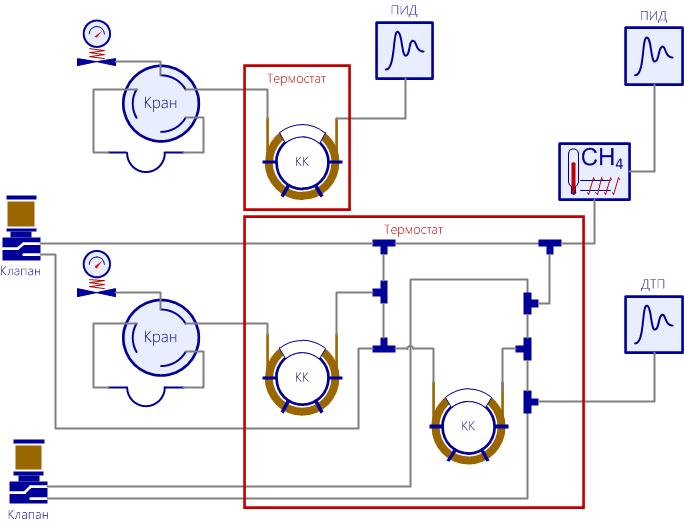
Chromatographic system based on two chromatographs:
Chromatec-Crystal 5000/9000
Detectors:
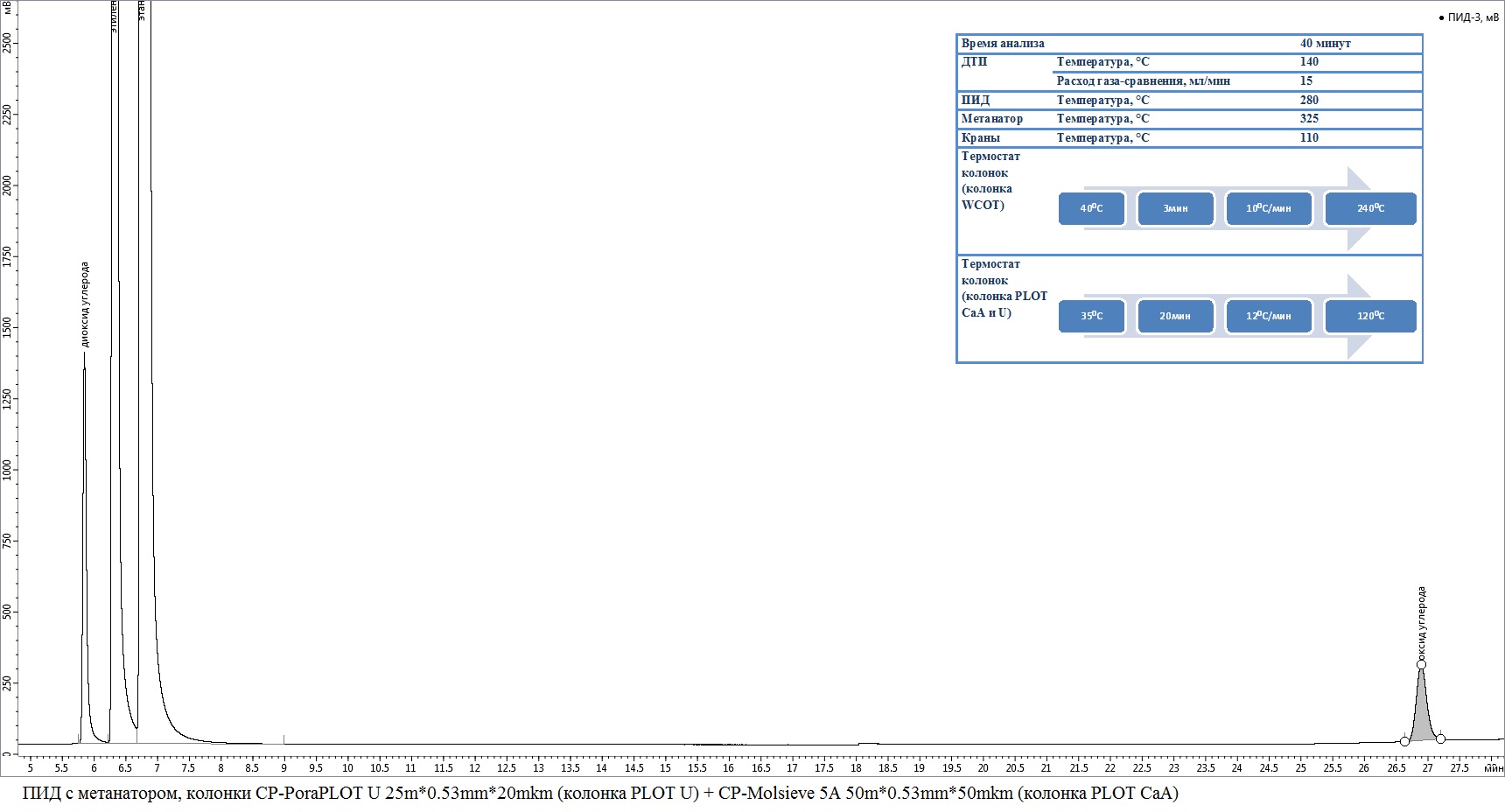
FID and TCD
Capillary columns:
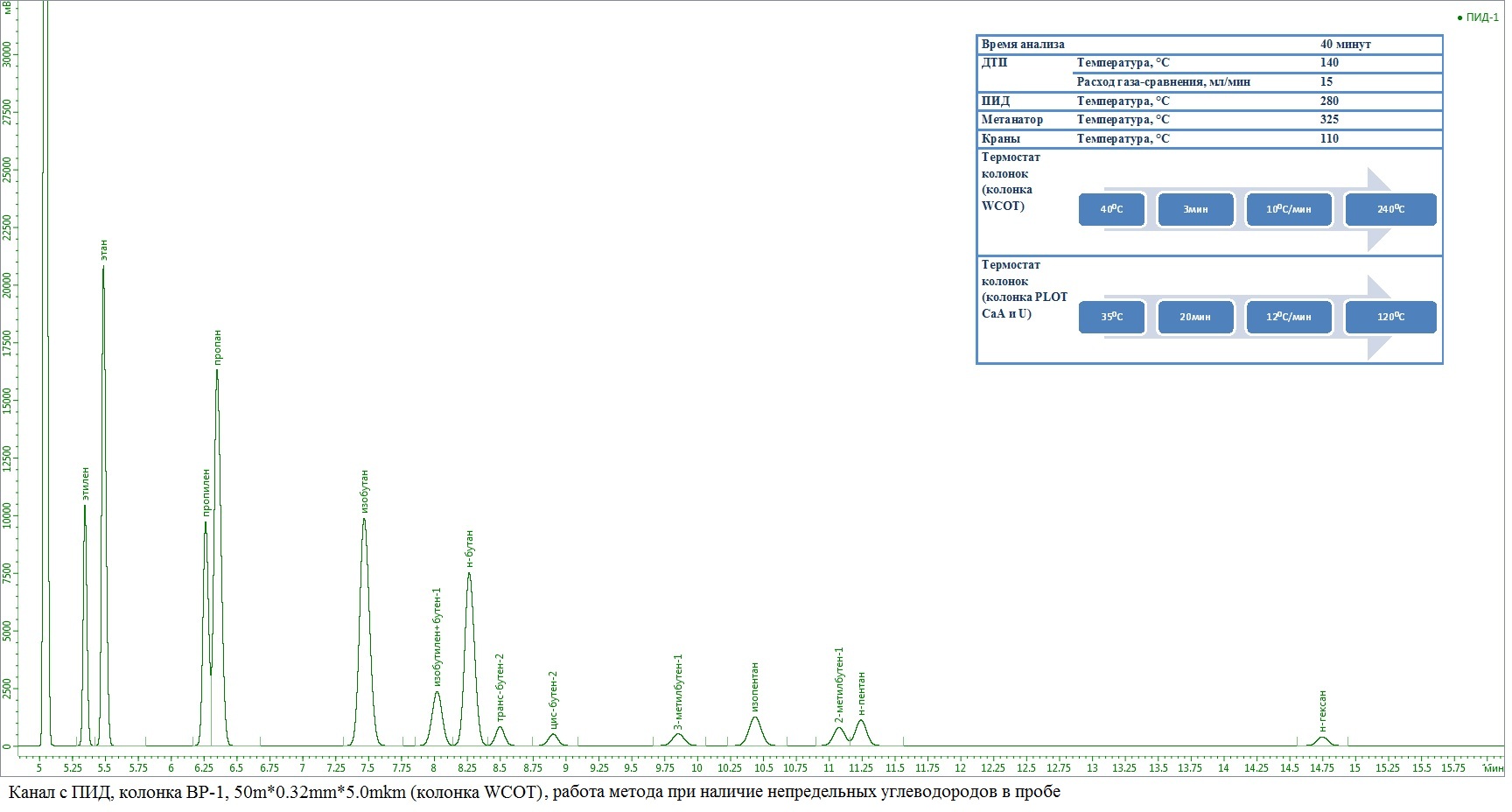
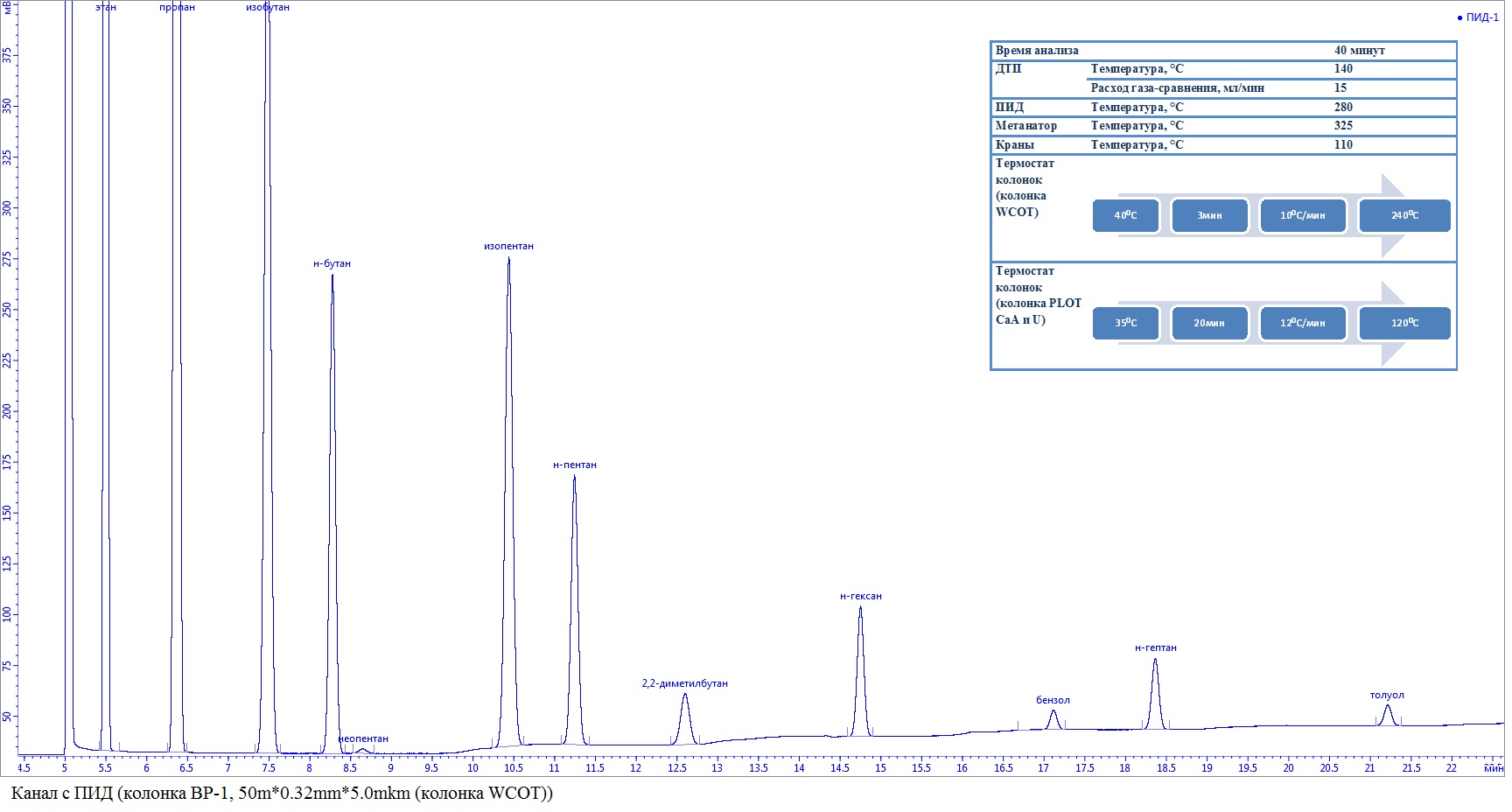
BP-1 column, 50 m × 0.32 mm × 5.0 µm (WCOT column)
CP-Molsieve 5A column, 50 m × 0.53 mm × 50 µm (PLOT CaA column)
CP-PoraPLOT U column, 25 m × 0.53 mm × 20 µm (PLOT U column)
Other columns may also be used in accordance with the applicable operating standard
Injection system:
Chromatec or Valco 6-port valves with loop volumes from 0.25 to 0.5 mL
Dean switching system
Methanizer
Heated transfer line
Gas flow indicator
Additional data processing software:
Chromatec Gas
Additional equipment:
Hydrogen generator
Air compressor
Gas fittings kit 4.078.000 (argon and nitrogen; helium may be used instead of nitrogen)
Combined catalytic purification filter 20.0-03
Certified gas mixtures (PGS, IPG) for instrument calibration
Adjustable pneumatic resistance RPS 5.150.019 for operation with standard gas mixtures and sampling devices
Method Description
GOST 31371 Part 6. Determination of hydrogen, helium, oxygen, nitrogen, carbon dioxide, and C1-C8 hydrocarbons using three capillary columns.
Implementation of this method requires the use of three columns installed in two gas chromatographs.
Due to the high separation efficiency of the capillary columns used, components that are normally absent in natural gas but may be present in certain natural gas simulants can also be detected by this method.
Therefore, compared with other parts of GOST 31371, this method offers additional advantages in terms of the range of detectable components and concentration ranges covered.
At the same time, this part is the most complex among the GOST 31371 methods in terms of equipment, setup, and maintenance.
GOST 31371.6
Molar fraction ranges of components covered by GOST 31371.6
| Component | Formula | Molar Fraction, % |
|---|---|---|
| Helium | He | 0.002–0.5 |
| Hydrogen | H2 | 0.001–0.5 |
| Oxygen | O2 | 0.007–5 |
| Nitrogen | N2 | 0.007–40 |
| Methane | CH4 | 40–100 |
| Carbon Monoxide | CO | 0.001–1 |
| Carbon Dioxide | CO2 | 0.001–10 |
| Ethyne (Acetylene) | C2H2 | 0.001–0.5 |
| Ethylene | C2H4 | 0.001–0.5 |
| Ethane | C2H6 | 0.002–15 |
| Propene | C3H6 | 0.001–0.5 |
| Propane | C3H8 | 0.001–5 |
| Isobutane | C4H10 | 0.0001–1 |
| n-Butane | C4H10 | 0.0001–1 |
| 2,2-Dimethylpropane (Neopentane) | C5H12 | 0.0001–0.5 |
| 2-Methylbutane (Isopentane) | C5H12 | 0.0001–0.5 |
| n-Pentane | C5H12 | 0.0001–0.5 |
| Cyclopentane | C5H10 | 0.0001–0.5 |
| 2,2-Dimethylbutane | C6H14 | 0.0001–0.5 |
| 2,3-Dimethylbutane | C6H14 | 0.0001–0.5 |
| 2-Methylpentane | C6H14 | 0.0001–0.5 |
| 3-Methylpentane | C6H14 | 0.0001–0.5 |
| n-Hexane | C6H14 | 0.0001–0.5 |
| Benzene | C6H6 | 0.0001–0.5 |
| Cyclohexane | C6H12 | 0.0001–0.5 |
| Heptanes | C7H16 | 0.0001–0.5 |
| Methylcyclohexane | C7H14 | 0.0001–0.5 |
| Toluene | C7H8 | 0.0001–0.5 |
| Octanes | C8H18 | 0.0001–0.5 |
| Xylenes | C8H10 | 0.0001–0.5 |
Notes
Carbon monoxide, ethylene, acetylene, and propene are usually absent in natural gas, but they may be present in natural gas simulants.
Separate determination of propane and propene depends on the column used.
Heptanes include: n-heptane, 2-methylhexane, 3-methylhexane, 3-ethylpentane, 2,2-dimethylpentane, 2,3-dimethylpentane, 2,4-dimethylpentane, 3,3-dimethylpentane, and 2,2,3-trimethylbutane. Not all isomers can be separated from one another.
Octanes include: n-octane, 2-methylheptane, 3-methylheptane, 4-methylheptane, dimethylcyclohexanes, 2,2-dimethylhexane, 2,3-dimethylhexane, 2,4-dimethylhexane, 2,5-dimethylhexane, 3,3-dimethylhexane, 3,4-dimethylhexane, 2,2,3-trimethylpentane, 2,2,4-trimethylpentane (isooctane), 2,3,3-trimethylpentane, 2,3,4-trimethylpentane, and 2,2,3,3-tetramethylbutane. Not all isomers can be separated from one another.
Xylenes include: o-xylene, m-xylene, and p-xylene; m-xylene and p-xylene are not separated from each other.
Under certain conditions (for example, with a larger sample volume), the analysis can also be extended to hydrocarbons heavier than C8 if their molar fraction exceeds 1 × 10⁻⁶ (0.0001%).